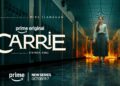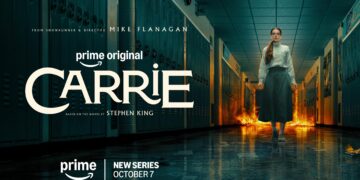














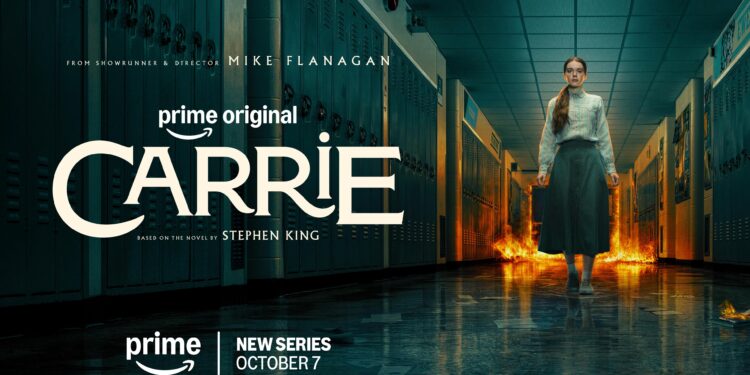

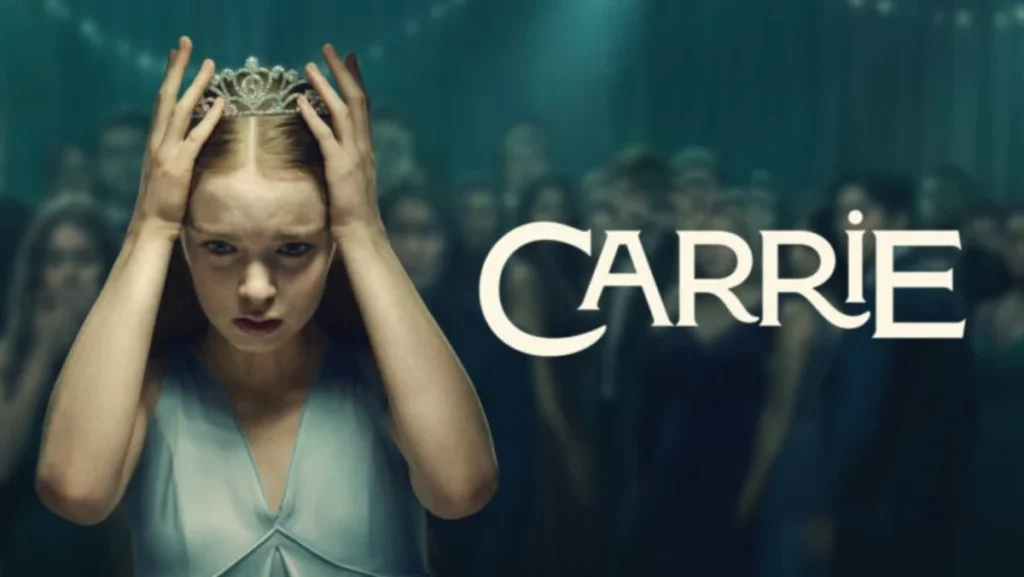
Mike Flanagan has done it again. With Carrie, he takes one of Stephen King’s most iconic stories and finds a way to modernize it without losing what made the original so powerful in the first place. King published Carrie in 1974, and just two years later Brian De Palma turned the novel into an incredible film that remains a horror classic. Carrie White, Margaret White and that blood-soaked prom have become ingrained in horror history, and multiple adaptations have followed in the decades since. Taking another swing at this story is no small feat, but if there is anyone I trust to step into King’s world and find something new to say, it’s Flanagan.
After Gerald’s Game, Doctor Sleep and The Life of Chuck, Flanagan has repeatedly demonstrated an understanding of King’s work that goes beyond simply adapting what is on the page. He understands the people at the center of these stories and the themes that have allowed them to resonate for decades. With Carrie, he asks a simple but incredibly effective question: What would Carrie White’s story look like if it happened today? The answer is frightening because, despite all of the supernatural elements surrounding Carrie, so much of what happens to her feels completely believable.
The series follows Carrie White (Summer H. Howell), a teenage girl who has spent most of her life secluded from the outside world. Following her father’s death, Carrie enters high school, where she is suddenly forced to navigate classmates, bullies, friendships and a world she has never truly been allowed to experience. At the same time, mysterious telekinetic abilities begin emerging, setting Carrie on the path toward the infamous tragedy anyone familiar with King’s novel or De Palma’s film knows is coming. Howell is joined by a fantastic ensemble that includes Samantha Sloyan, Siena Agudong, Alison Thornton, Joel Oulette, Josie Totah, Arthur Conti, Thalia Dudek, Amber Midthunder and Matthew Lillard.
Carrie White in the Age of Social Media
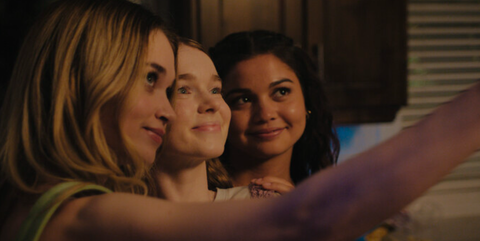
One of the smartest things Flanagan does with Carrie is recognize just how perfectly this story fits into the modern world. Bullying has changed dramatically since King published his novel, and this isn’t the high school many of us grew up with. Students walk through metal detectors, active-shooter drills are a normal part of their lives, and almost every student has a camera in their pocket capable of turning someone’s worst moment into entertainment for thousands of people before the school day is even over.
That makes Carrie’s isolation even more devastating. Cruelty no longer has to end when she leaves school because a video, rumor or accusation can follow her everywhere. The series explores how quickly an entire community can be led to believe something and how easily perception becomes accepted as fact once enough people repeat it. That mob mentality becomes one of the most frightening aspects of the series because there is absolutely nothing supernatural about it. Carrie’s telekinetic abilities might be what technically makes this a horror story, but watching a community collectively decide who someone is without ever truly knowing them can be just as terrifying.
Flanagan also uses the modern setting to explore how difficult it has become for adults to protect children from dangers they themselves are still trying to understand. There is an undercurrent of fear running through the entire series, from school safety to social media to the simple realization that the adults in charge cannot possibly control everything these kids encounter. It gives Carrie a relevance that goes far beyond simply putting smartphones into a story written in the 1970s.
Summer H. Howell Is Incredible as Carrie
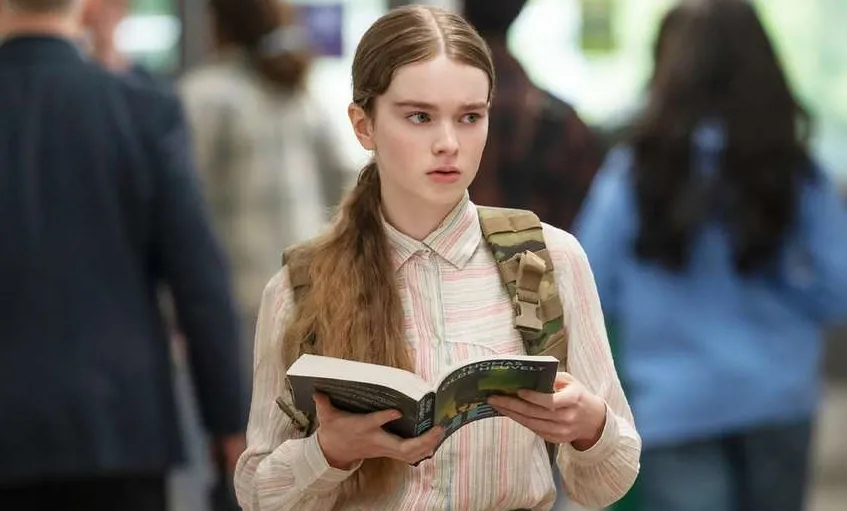
None of this works without a Carrie White we genuinely care about, and Summer H. Howell is insanely talented. Taking on this character is an enormous challenge when you consider the legacy surrounding the role, most notably Sissy Spacek’s iconic performance in De Palma’s film. Howell never feels like she is attempting to recreate what someone else has already done. Instead, she finds her own version of Carrie and gives a truly incredible performance that allows this adaptation to stand on its own.
There is an innocence and vulnerability to Howell’s performance that immediately makes you want to protect Carrie. Because this version of the character has been so sheltered, even seemingly ordinary experiences carry enormous emotional weight. Howell beautifully captures Carrie discovering friendship, acceptance and kindness while simultaneously learning just how cruel the outside world can be. Some of her best moments come from simply watching Carrie process something she has never experienced before, and Howell is able to communicate so much without needing to spell out exactly what Carrie is feeling.
What impressed me most, however, is the range she displays as the season progresses. Carrie isn’t simply a victim waiting for prom night. There is anger, fear, curiosity, joy and an increasingly frightening power simmering underneath everything. Howell can make Carrie feel heartbreakingly small in one moment and genuinely terrifying in the next. Even if you know this story and understand exactly where it is headed, she makes you desperately hope that somehow, this time, things will turn out differently. For a series filled with strong performances, Howell is the revelation at its center, and she makes Carrie White completely her own.
Samantha Sloyan Brings a Different Margaret White to Life
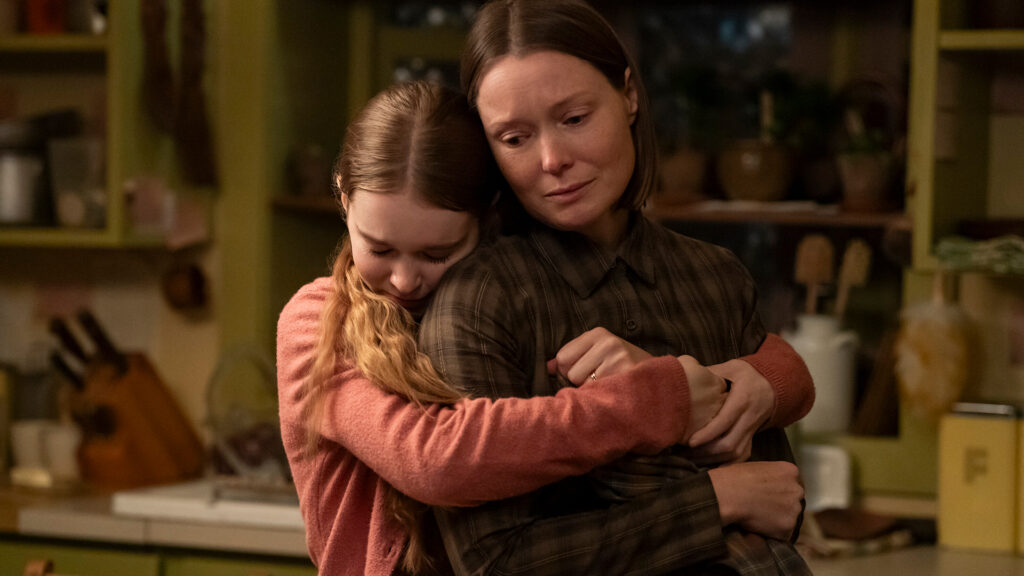
Samantha Sloyan is equally impressive as Margaret White, although Flanagan’s interpretation of Carrie’s mother is noticeably different from the character many viewers will remember. Margaret is still deeply religious, but that aspect of her character has been dialed back in favor of exploring her as an overbearing mother who believes she is protecting her daughter from a horrifying world. Considering Sloyan and Flanagan’s previous work together, it should surprise absolutely no one that she is incredible here.
What makes this Margaret interesting is that the world she is afraid of actually is dangerous. Her methods are wrong and the damage she inflicts on Carrie is undeniable, but she genuinely believes what she is doing is necessary to protect her daughter. That distinction gives Sloyan much more to play with than simple religious fanaticism. Margaret’s fear and love become twisted together until she can no longer distinguish protecting Carrie from controlling her, and Sloyan manages to find the humanity inside that contradiction without asking us to excuse the consequences.
That idea becomes one of the strongest themes running throughout the series. Nearly every adult believes they are doing what is best for these children, even when their decisions make things worse. Matthew Lillard’s principal and Amber Midthunder’s gym teacher, Ms. Desjardinare both navigating a generation and a world that can feel foreign to them. Their intentions may be good, but Carrie repeatedly asks whether good intentions actually matter when the person you are trying to protect still ends up hurt.
The Bullies Aren’t So Black and White
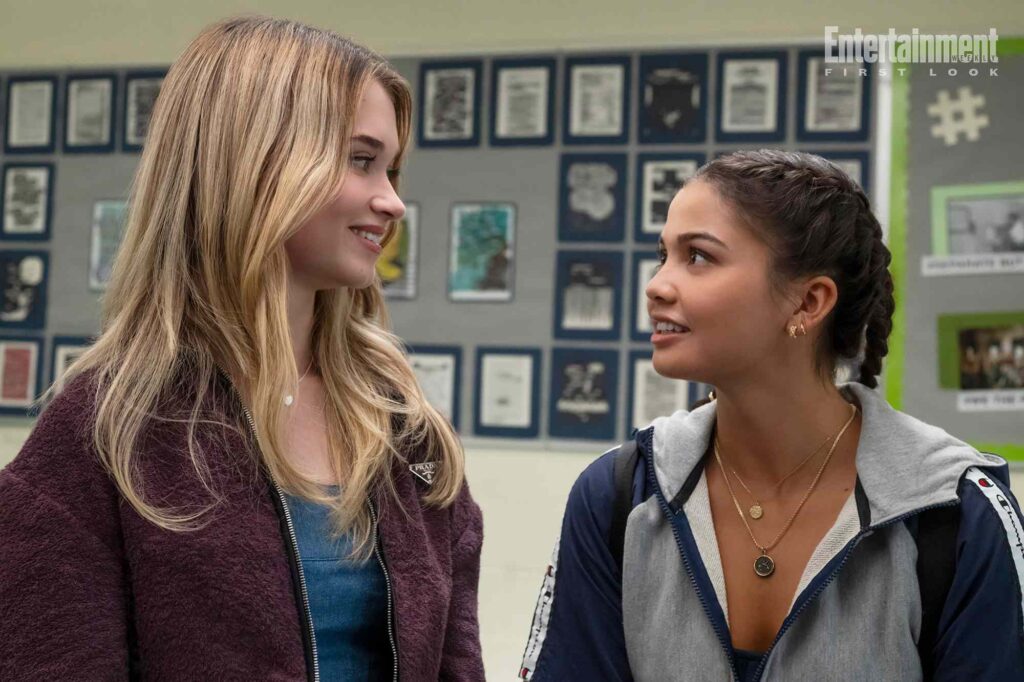
The expanded runtime also gives Flanagan the opportunity to spend significantly more time with Carrie’s classmates, particularly the people responsible for tormenting her. Alison Thornton’s Chris leads the charge against Carrie, but this version refuses to make her evil simply because the story needs a villain. Chris has problems of her own, and the series gives us enough access to her life to understand some of the anger driving her. That added context never becomes an excuse for what she does, and that distinction is important.
What ultimately makes Chris such an effective antagonist is her inability to recognize when enough is enough. She is repeatedly presented with opportunities to see the damage she is causing, yet she continues moving further down that path. Arthur Conti’s Billy Nolan becomes the devil on her shoulder, encouraging her worst impulses as things continue escalating, while Josie Totah’s Tina Blake helps illustrate how cruelty can become communal when everyone around you reinforces the same behavior. Flanagan is particularly interested in that group dynamic and the way people can participate in something terrible without necessarily viewing themselves as terrible people.
Thankfully, Carrie isn’t completely alone. Siena Agudong’s Sue Snell and Joel Oulette’s Tommy Ross provide some much-needed humanity in her life, and the additional runtime gives those relationships room to develop beyond their basic function within the original story. That becomes one of the biggest advantages of telling Carrie as a series. These characters have time to exist outside of their relationship to Carrie, which makes the choices they eventually make—and the consequences of those choices—carry considerably more weight.
The Expanded Runtime Is Both a Strength and a Weakness
Unfortunately, having more time isn’t always an advantage. There is a stretch in the middle of Carrie where the story begins to drag, and certain storylines could have been tightened considerably. Because almost everyone watching knows there is a prom waiting at the end of this story, maintaining momentum toward that inevitable event becomes incredibly important, and there are moments where the series loses some of that urgency.
Thankfully, Flanagan absolutely sticks the landing. The infamous prom sequence is still here, and without getting into spoilers, it is wild. What makes it work isn’t simply the scale of what happens but everything the series has built around it. We have spent considerably more time with Carrie, her classmates, her mother and the adults surrounding them, so when all of those relationships and mistakes finally collide, the consequences hit harder.
Flanagan knows that audiences are waiting for the blood. We know the image, we know the story and we know what is supposed to happen. His challenge isn’t surprising us with the existence of prom night; it’s making us dread getting there despite already knowing what waits on the other side. By the time everything comes crashing down, the sequence feels like the culmination of an entire community’s failures rather than simply Carrie finally snapping.
Could Carrie Become Something Much Bigger?
Perhaps the most exciting aspect of the series for me is what Flanagan appears to be setting up beyond the story we already know. There are ideas introduced throughout Carrie that could potentially open the door to a much larger exploration of King’s universe, and as someone who considers Doctor Sleep my favorite Flanagan film and favorite Stephen King adaptation, there were certain moments that immediately got my attention.
Without diving too deeply into spoilers, the mention of the “shine” is impossible to ignore. The way certain characters use their abilities also feels incredibly reminiscent of the psychic mythology Flanagan explored in Doctor Sleep, and it immediately had me wondering just how interconnected this world could eventually become. I actually had the opportunity to ask Flanagan about those connections and the possibility of seeing characters like Abra Stone, the True Knot and other pieces of King’s universe enter this world down the line, and his answer only made me more intrigued by what could potentially come next.
Flanagan has spoken about a dream scenario in which he would have three seasons to explore Carrie’s arc, and after seeing where this season leaves things, I desperately want to see what that looks like. The ending lays the groundwork for a future that feels less like someone simply extending Carrie and more like the type of evolution King himself might have explored if all of these characters, stories and ideas had existed when he originally wrote the novel.
Final Thoughts
Mike Flanagan’s Carrie isn’t his best work, but when you are talking about the filmmaker behind Midnight Mass, The Haunting of Hill House and Doctor Sleep, that is an incredibly high bar. What he has created is still pretty damn good, and most importantly, this adaptation has a reason to exist. Rather than simply retelling King’s story with smartphones and social media, Flanagan examines what it actually means to be Carrie White in 2026.
Bullying no longer stops when the school bell rings. Rumors can transform into accepted facts within hours. Someone’s worst moment can be recorded, uploaded and preserved forever, while the adults desperately trying to protect children are navigating a world that has changed almost as dramatically as the kids themselves. Nearly 50 years after King introduced Carrie White, her story shouldn’t feel this timely, and yet that is exactly why this adaptation works so well.
The middle of the season could use some tightening, but the destination makes the slower journey worthwhile. Samantha Sloyan delivers a fascinating reinterpretation of Margaret White, the supporting cast gives Flanagan plenty of room to expand King’s world, and Summer H. Howell delivers an incredible, potentially star-making performance as Carrie. Most importantly, Flanagan sticks the landing and leaves behind possibilities that have me genuinely excited about where this story could go next.
If you’re a Stephen King fan, a Carrie fan or someone who already loves Flanagan’s work, there is a hell of a lot to enjoy here. It may not reach the heights of Flanagan’s very best work, but once again, he proves why he understands Stephen King’s characters and worlds better than almost anyone adapting them today.
4 out of 5 Seths.