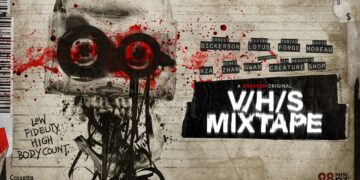








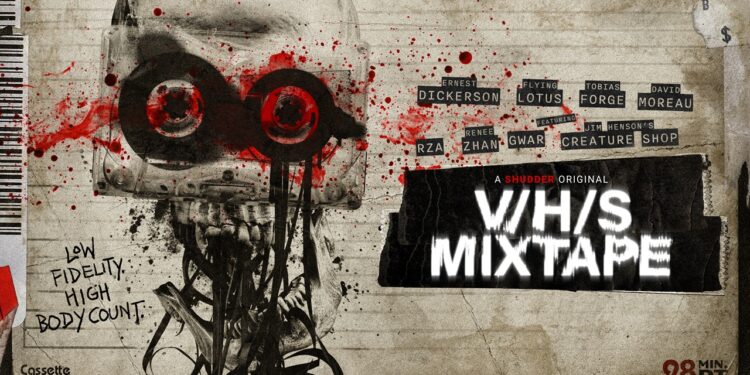

The V/H/S franchise has never been afraid to get weird, but V/H/S/Mixtape might be one of its wildest experiments yet. I had the chance to catch the film early at Beyond Fest, and trust me, if you’re a fan of this franchise, this is one you’re going to want to watch. Hitting Shudder this weekend, the latest installment takes the franchise’s signature found-footage formula and cranks the volume all the way up, delivering a collection of stories that are as disgusting as they are delightfully unhinged.
One of the things I’ve always appreciated about V/H/S is its ability to reinvent itself. Every installment brings a new group of filmmakers into the fold, allowing them to put their own twisted spin on the anthology format. Some entries work better than others, but there’s something exciting about never knowing what kind of madness you’re about to experience when that next tape starts rolling. V/H/S/Mixtape is no different, bringing together an eclectic group of filmmakers who push the craziness, weirdness, and downright disgusting nature of this franchise to new heights.
This time around, music and sound take center stage, with each filmmaker finding a unique way to explore the relationship between what we hear and what absolutely terrifies us. But let’s get one thing straight: V/H/S/Mixtape might also be the crudest, grossest, most gore-soaked entry this franchise has delivered yet. We’re talking an absolutely ridiculous amount of blood, bodily fluids, and enough disgusting imagery to make even the most seasoned horror fans squirm. A huge part of that comes courtesy of the legendary GWAR, who serve as our hosts for this found-footage extravaganza. Their signature brand of grotesque humor, outrageous violence, and complete disregard for good taste feels right at home in the V/H/S universe, pushing the anthology into territory that’s somehow even more depraved than what we’ve seen before. And yes, there are hot dogs involved, but I’ll let you discover that particular nightmare for yourself.
What follows is an auditory descent into madness that proves there’s still plenty of life left in this franchise.
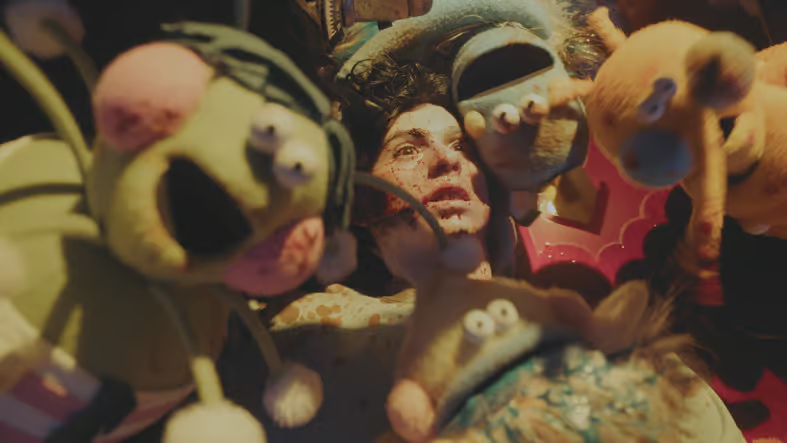
Dance, Dance, Dance, Dance — Directed by Renee Zhan
Kicking things off is Renee Zhan’s Dance, Dance, Dance, Dance, which takes something as seemingly innocent as a children’s puppet show and transforms it into an absolutely bonkers nightmare. The story follows a studio attempting to revive a canceled puppet program, only to discover that the puppets might have a few sinister surprises waiting behind those adorable little faces. What starts as a bizarre behind-the-scenes look at children’s entertainment quickly spirals into the kind of madness that only V/H/S could deliver.
If you’re a fan of puppets and practical effects, this one is going to be right up your alley. The puppets, brought to life with the help of Jim Henson’s Creature Shop, are easily the stars of the show. There’s something inherently unsettling about taking characters designed to entertain children and twisting them into something so grotesque. Zhan understands that contrast perfectly, leaning into the absurdity while never losing sight of the horror.
What I particularly enjoyed was just how far this segment was willing to take its concept. It doesn’t settle for simply being creepy or weird. Instead, it embraces the ridiculousness of its premise and keeps pushing until you’re left wondering what the hell you just watched. These puppets are absolutely killer, and I mean that in more ways than one. It’s a wonderfully twisted way to kick off an anthology that only gets stranger from here.
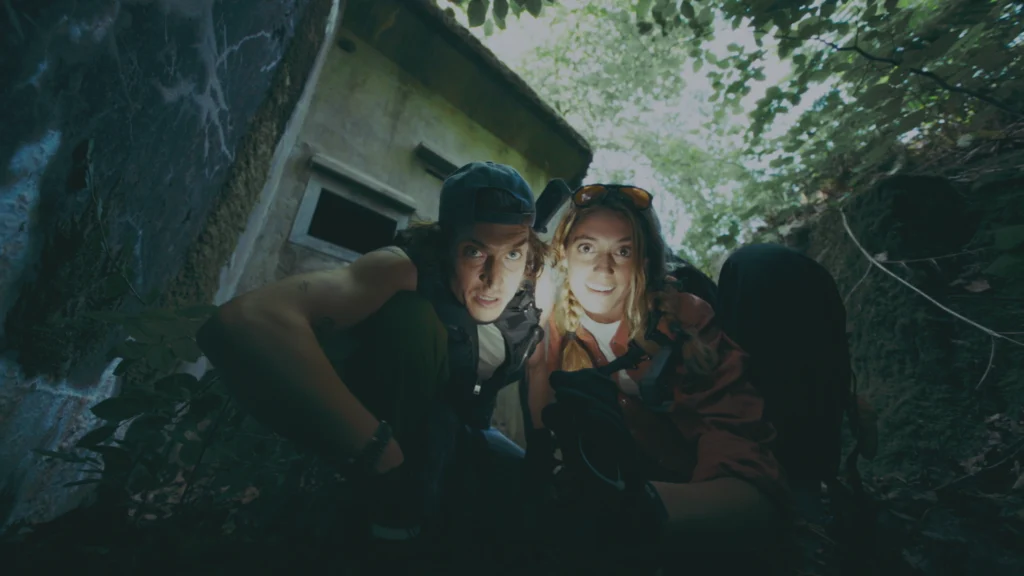
Heartbeat — Directed by David Moreau
David Moreau’s Heartbeat might genuinely make you reconsider whether you ever want to hear another sound again. Following two urban-exploration influencers who venture into an abandoned military facility, the segment introduces us to a location where dangerous sonic experiments have left behind something truly horrifying. Rather than relying on traditional jump scares, Moreau turns sound itself into the enemy, creating an experience that’s as physically uncomfortable as it is disturbing.
Have you ever become hyperaware of your own heartbeat or suddenly noticed the sounds your body makes that you normally never think twice about? Now imagine those sounds amplified to the point where they become absolutely unbearable. That’s the kind of nightmare Moreau has created here, and holy shit, does it get uncomfortable. As someone who loved his previous film MADS, I was excited to see what he would bring to the V/H/S franchise, and he certainly doesn’t disappoint when it comes to finding new ways to make an audience squirm.
The sound design is the real monster of this segment, with every little noise becoming an opportunity to make your skin crawl. There were moments where I genuinely wanted to cover my ears because of just how gross everything sounded. If you’re a fan of mukbang videos, imagine someone taking that entire sensory experience and transforming it into the most horrifying version imaginable. Moreau creates something that feels less like a traditional horror short and more like a full-blown assault on your senses. It’s disgusting, inventive, and exactly the kind of experimental filmmaking I love seeing from this franchise. After experiencing Heartbeat, I never want to hear my own heartbeat again.
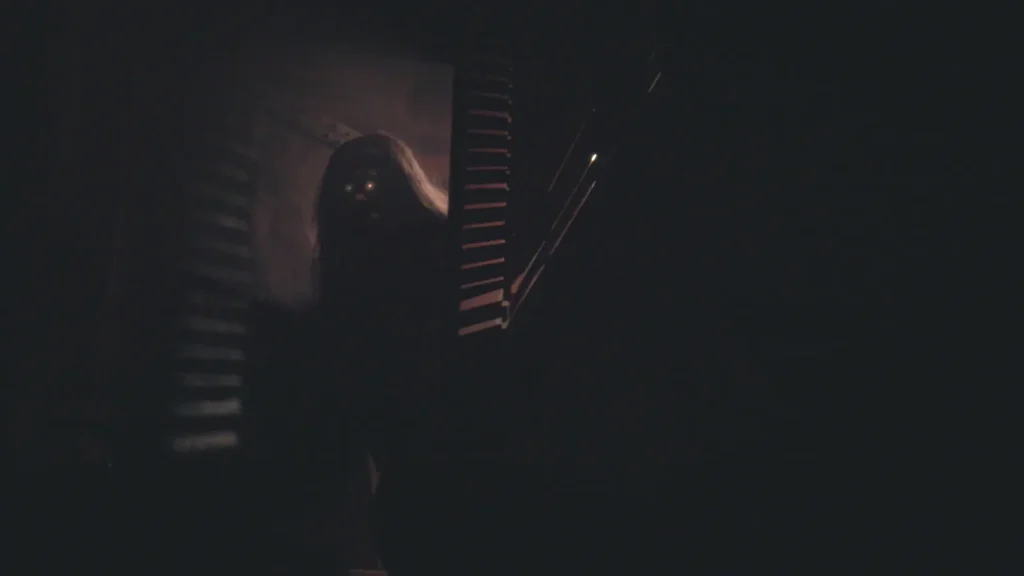
The Music of Mr. Sze — Directed by Ernest Dickerson
As a massive fan of cosmic horror, The Music of Mr. Sze was easily one of my favorite segments of the entire anthology. Directed by Ernest Dickerson, the story follows a college film student investigating a mysterious musician whose violin performances appear to be connected to something far more sinister than anyone could have imagined. What initially feels like a strange musical mystery slowly transforms into something much larger, introducing cosmic elements that push the story into some genuinely fascinating territory.
There’s something terrifying about the idea that music could connect us to forces beyond our understanding. Sound becomes more than something we experience through our ears; it becomes a doorway into something incomprehensible, and Dickerson takes full advantage of that premise. Some of the imagery here is truly breathtaking, particularly once the segment begins embracing its more otherworldly elements. I loved the way the visuals complemented the music, creating moments that felt almost hypnotic before reminding you that you’re watching a horror movie.
My biggest issue was with the main character, who could be a little much at times. There were moments where their personality became distracting, and I found myself wishing the performance had been dialed back just a bit. Thankfully, that never completely derailed my enjoyment, as the creativity behind the story and the sheer spectacle of its cosmic horror more than make up for those frustrations. There’s even a special appearance from producer and V/H/S mastermind Josh Goldbloom, which adds another fun surprise to the experience.
The Music of Mr. Sze is a perfect example of why I keep coming back to these anthologies. It’s imaginative, ambitious, and willing to explore ideas that might never find their way into a traditional feature-length horror film. Even with my issues surrounding the lead character, I found myself completely captivated by the world Dickerson created and would love to see this concept explored even further.
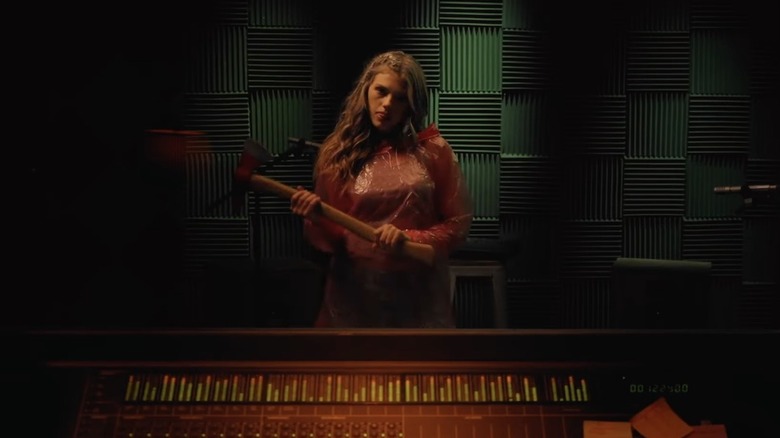
Death Tone — Directed by RZA and Matt Landsman
Of all the segments in V/H/S/Mixtape, Death Tone was easily my favorite, and it might be one of the most uniquely twisted concepts I’ve seen from this franchise in quite some time. Directed by RZA and Matt Landsman, the story follows a young sound engineer who attempts to create the ultimate musical composition by following instructions left behind by her deceased father. Unfortunately for anyone who crosses her path, achieving musical perfection requires a whole lot of bloodshed, and what follows is one of the most wonderfully deranged stories this anthology has to offer.
Neela Jolene absolutely crushes it as the villainous lead, a woman so obsessed with creating the perfect song that she’s willing to use just about anything to get the sounds she needs. Armed with an axe, a chainsaw, and her late father’s supply of narcotics, she begins recording the screams of unsuspecting victims, transforming their suffering into the building blocks of her masterpiece. It’s completely deranged, and I loved every second of it.
What makes this segment so effective is how fully it commits to its concept. The violence isn’t simply there for shock value; every gruesome act serves the character’s obsession with sound, making the brutality feel like a twisted extension of the music she’s trying to create. Jolene is phenomenal throughout, delivering a performance that’s equal parts terrifying, unhinged, and strangely captivating. There’s an intensity to her portrayal that makes it impossible to look away, even when you desperately want to.
The practical effects are gnarly, and one particular sequence involving a violin had me practically crawling out of my seat. I won’t spoil what happens, but it’s easily one of the most uncomfortable moments in the entire film. RZA and Landsman understood the assignment, creating something that feels fresh, unpredictable, and completely unlike anything I’ve experienced in V/H/S before. If there’s one segment from Mixtape that I could see myself revisiting over and over again, it’s this one.
Music Videos, GWAR, and One Hell of a Twisted Mixtape
What makes V/H/S/Mixtape stand apart from previous installments isn’t just the individual stories, but the way the entire anthology embraces the idea of music as both entertainment and horror. Rather than simply presenting a collection of found-footage shorts, the film incorporates music videos and an outrageous wraparound that gives the experience its own distinct identity. It’s a creative decision that allows the filmmakers to experiment with different styles while maintaining the chaotic energy that has become synonymous with the franchise.
Flying Lotus delivers Another Cabin, an animated horror music video packed with wild imagery and the kind of experimental creativity I’ve come to expect from his work. The animation is rad, the visuals are absolutely insane, and it feels perfectly at home in an anthology that’s constantly trying to push the boundaries of what this franchise can be. It’s another reminder of just how versatile horror can be when filmmakers are given the freedom to experiment outside traditional storytelling conventions.
Then there’s Premature Burial, the death-metal horror music video from Tobias Forge’s band Repugnant. This one brings a completely different energy, combining the aggression of death metal with a twisted revenge story featuring one badass woman getting some much-deserved payback. It’s bloody, chaotic, and a hell of a lot of fun, perfectly capturing the spirit of an anthology that seems determined to throw everything imaginable at the screen.
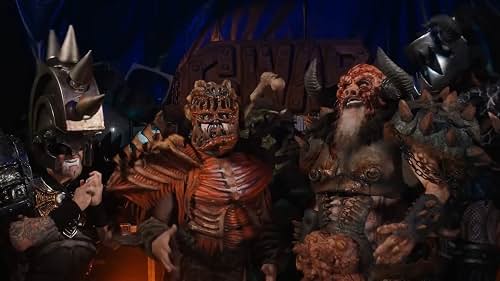
And then, of course, there’s GWAR. Having the legendary band serve as the connective tissue between the different stories is such an inspired choice. Their grotesque costumes, outrageous personalities, and completely unapologetic sense of humor feel tailor-made for a franchise that has never been particularly interested in playing by the rules. The wraparound plays like some demented late-night music television broadcast, complete with bizarre sketches, disgusting gags, and a level of absurdity that keeps things entertaining between the main segments.
GWAR’s involvement is a massive reason why this installment feels so much more crude and disgusting than its predecessors. There’s an almost impressive commitment to being as offensive, grotesque, and downright filthy as possible, with bodily fluids, gore, and some truly outrageous gags practically becoming characters of their own. It’s excessive in every conceivable way, but that’s also part of the charm. Not every joke lands, and there are moments where the gross-out humor threatens to overshadow everything else, but I couldn’t help appreciating just how unapologetically ridiculous the whole thing gets. GWAR doesn’t simply host V/H/S/Mixtape; they help turn it into one of the nastiest, most unhinged experiences this franchise has offered yet.
Final Thoughts
At this point, the V/H/S franchise has established itself as one of the most consistently inventive anthology series in modern horror. While not every installment or individual segment is going to work for everyone, there’s something incredibly refreshing about a franchise that continues giving filmmakers the freedom to experiment. V/H/S/Mixtape is another strong addition to that legacy, offering a collection of stories that feel connected through their exploration of music and sound while still allowing each filmmaker to bring something completely different to the table.
What I appreciate most about this installment is how it uses sound and music to explore different corners of horror. Each filmmaker approaches the concept from a completely different direction, whether it’s the unsettling sounds of the human body, the cosmic possibilities of a mysterious musician, or the horrifying lengths someone might go to create the perfect song. That variety is what makes the experience so much fun, even when certain segments don’t quite reach the same heights as others.
There are certainly moments where the anthology feels uneven, and some segments are stronger than others. But even when something doesn’t completely land, there’s usually an interesting creative choice or a particularly nasty visual waiting around the corner. It’s weird, experimental, disgusting, and occasionally downright ridiculous. In other words, it’s exactly what I want from a V/H/S movie.
Is it my favorite entry in the franchise? Not quite, but I sure as hell had a blast watching it. If you’re a longtime fan of V/H/S, there’s plenty here to sink your teeth into, and if you love horror that isn’t afraid to get a little weird, crank up the volume, and make you deeply uncomfortable, this is one mixtape worth pressing play on.
V/H/S/Mixtape earns 3.5 out of 5 Seths.
V/H/S/Mixtape arrives on Shudder this weekend.