













Rating: 5/5
Spoiler Warning: This review contains major plot details and discusses the ending of Godzilla Minus Zero.
Following the extraordinary success of Godzilla Minus One, Takashi Yamazaki faced the unenviable task of following up a film that not only revitalized one of cinema’s most iconic monsters but also reminded audiences why Godzilla has remained such an enduring figure for more than seven decades. What made Minus One so remarkable wasn’t simply its breathtaking spectacle or the terrifying presence of its titular monster. It was the deeply human story beneath the destruction, one that explored the psychological wounds of war, and the burden of survivor’s guilt. With Godzilla Minus Zero, Yamazaki has somehow delivered another extraordinary achievement, expanding the scope of his predecessor while shifting his attention toward the people who must inherit the consequences of humanity’s most destructive decisions.
On a purely cinematic level, Godzilla Minus Zero is an absolute spectacle. The introduction of King Ghidorah brings an entirely different kind of terror to Yamazaki’s world, and the creature’s design might be one of my favorite interpretations of the iconic three-headed monster to date. His transformations throughout the film are astonishing, while his ability to manipulate gravity fields creates some genuinely breathtaking sequences. There’s an almost incomprehensible scale to his presence, making even the most elaborate displays of human ingenuity feel insignificant by comparison. The visual effects are extraordinary, but equally impressive is the film’s score, particularly during Ghidorah’s first appearance. The combination of music, imagery, and sheer overwhelming dread gave me full-body chills, delivering the kind of unforgettable theatrical experience that reminds me why I fell in love with cinema in the first place.
Yet for all its remarkable spectacle, the film’s greatest achievement lies in its thematic ambition.
The People Left Behind
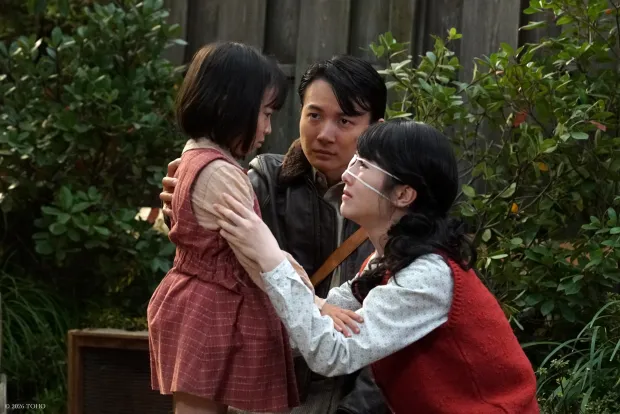
Where Godzilla Minus One largely examined the consequences of war through the experiences of soldiers who survived it, Minus Zero shifts its perspective toward the civilians left behind, particularly those whose lives have been shaped by decisions they never had the opportunity to make. Through Akiko and the children at the orphanage, Yamazaki explores an entire generation forced to inherit the trauma of a conflict they never participated in. These children have already endured unimaginable loss, and the possibility of yet another catastrophe threatens to rob them of the futures they have barely begun to imagine. It’s a heartbreaking reminder that the consequences of war extend far beyond the battlefield, often affecting those who bear the least responsibility for its existence. What future are we truly protecting when we’re willing to abandon the very people who are supposed to inherit it?
That question becomes particularly disturbing through the film’s examination of America’s continued reliance on nuclear weapons. Despite the devastation already inflicted upon Japan, the possibility of deploying another atomic bomb, this time against Godzilla, remains a consideration, with such destructive power viewed as reassurance against the emerging threat of Ghidorah. Rather than confronting the consequences of humanity’s previous actions, those in positions of authority continue to believe that greater destruction might somehow provide the solution. It’s an unsettling reflection of a cycle that has repeated itself throughout history, where violence becomes the justification for developing increasingly powerful means of inflicting more violence. Yamazaki understands that the most frightening aspect of this mentality isn’t necessarily the weapons themselves, but humanity’s persistent belief that it can control the consequences of using them.
This idea becomes central to the journey of Kanji Murakami, whose experiences surviving both the atomic bombing and Godzilla have left him consumed by guilt, grief, and a desire for revenge. Murakami is a fascinating character because his motivations are rooted in genuine suffering, even as his response threatens to perpetuate the very destruction that shaped his life. His determination to develop a greater weapon comes from a belief that overwhelming power might finally allow him to reclaim some measure of control over a world that has repeatedly taken everything from him. Yet his story also raises one of the film’s most important questions: At what point does the desire to avenge those we’ve lost become an excuse to create more victims? It’s a difficult contradiction, and one that Yamazaki explores with considerably more nuance than a straightforward conflict between right and wrong.

The Weight of Guilt
Equally compelling is Makoto Aoyama, portrayed by Masami Nagasawa, whose story became one of the film’s most personally affecting elements for me. A meteorologist haunted by the deaths caused by a devastating typhoon, Makoto carries an overwhelming sense of responsibility despite having warned her superiors of the approaching danger. Their refusal to raise the alarm, motivated by a desire to avoid public panic, resulted in catastrophic consequences, yet she continues to blame herself for failing to prevent the tragedy. What makes her character so heartbreaking is that her guilt stems not from indifference or negligence, but from an inability to accept that some events remain beyond our control. Her story also reflects the film’s broader examination of institutional failure, as those responsible for making decisions are not always the ones forced to live with their emotional consequences.
I’ve always been fascinated by meteorology, and growing up, becoming a meteorologist was something I genuinely dreamed of pursuing. Weather has always captivated me, particularly the extraordinary forces responsible for creating some of nature’s most beautiful and destructive phenomena. No matter how advanced our technology becomes or how much our understanding of the natural world evolves, there will always be limits to our ability to control it. We can study these events, recognize warning signs, and prepare for their arrival, but we cannot simply command nature to behave according to our wishes. That understanding made Makoto’s journey resonate with me on a particularly personal level, especially as she struggles to reconcile her professional knowledge with the emotional burden of believing she should have somehow accomplished the impossible.
It’s through Makoto’s experiences that the returning Kenji Noda receives one of the film’s most meaningful character developments. Having spent years carrying the guilt of the weapons he helped create during World War II and the lives lost as a result, Noda recognizes something painfully familiar in Makoto’s inability to forgive herself. Both characters have allowed their perceived failures to define their lives, although their circumstances and responsibilities are markedly different. Noda’s eventual sacrifice feels like the culmination of a debt he has long believed himself obligated to repay, but the emotional significance of his journey extends far beyond the circumstances of his death. By entrusting Makoto with continuing his work, he offers her something he has struggled to grant himself: the opportunity to move forward without allowing guilt to dictate the entirety of her future.
Noda’s relationship with Murakami provides an equally powerful conclusion to his story. Having witnessed firsthand the devastation caused by increasingly destructive weapons, Noda understands the danger of allowing grief and resentment to become the driving forces behind technological advancement. His attempts to reach Murakami aren’t simply about preventing another catastrophe, but about convincing someone who has experienced unimaginable suffering that revenge cannot restore what has already been lost. There’s something deeply moving about the idea that a man who has spent much of his life believing his contributions to the world were defined by destruction might ultimately leave behind a legacy rooted in compassion and understanding. Noda cannot undo his past, but he can help ensure that someone else doesn’t repeat it, bringing his character’s journey to a conclusion that feels both heartbreaking and remarkably fitting.

Ghidorah Is the Storm
These interconnected stories also reveal why Ghidorah is such an effective presence within the film. More than simply an enormous adversary for Godzilla to confront, Ghidorah functions as the catalyst forcing these characters to confront their unresolved guilt, grief, and desperate desire for control. In many ways, Ghidorah is the storm at the center of Godzilla Minus Zero, an uncontrollable force of nature whose existence threatens to overwhelm everything in its path. His apparent indifference toward humanity makes him particularly terrifying, especially as he actively hunts people and swallows them whole, reducing human life to something almost insignificant. He doesn’t need to possess a personal hatred for humanity to bring about its destruction, just as a typhoon doesn’t need malicious intent to devastate an entire community. The people caught in his path are left struggling to survive a catastrophe they neither created nor possess the power to stop.
This interpretation becomes even more compelling when considered alongside Makoto’s experiences. Having already witnessed the consequences of a natural disaster and spent years blaming herself for her inability to prevent it, she now finds herself confronting an even more extraordinary manifestation of the same fundamental fear. Ghidorah embodies the terrifying reality that humanity’s knowledge and ingenuity, however impressive, cannot guarantee absolute control over the world around us. At the same time, his arrival forces Murakami, Noda, and the other characters to confront the destructive impulses and unresolved trauma that have shaped their decisions. Their journeys are distinct, but Ghidorah becomes the force that brings them together, pushing each toward a reckoning that might otherwise have remained unresolved.
It’s also this emphasis on the human characters that helps explain why Godzilla’s presence can occasionally feel more limited than expected. Upon reflection, however, I don’t believe the film necessarily needed more of him. Rather, Yamazaki has deliberately shifted the emotional perspective of the story, allowing the new characters and their individual struggles to guide the narrative while Ghidorah serves as the overwhelming threat connecting their experiences. There were moments when I jokingly found myself thinking the film could have been titled Ghidorah Minus One, but that speaks more to the effectiveness of Ghidorah’s introduction than any meaningful dissatisfaction with Godzilla’s screen time. The titular monster remains an essential part of the story, and his involvement carries greater significance because the film has taken the time to establish what is at stake for the people whose lives depend upon the outcome.

Breaking the Cycle of Destruction
The final confrontation between Godzilla and Ghidorah delivers the kind of extraordinary spectacle audiences have come to expect from the franchise, although I would certainly never complain about spending more time watching these two iconic creatures unleash absolute hell upon one another. Nevertheless, the more I’ve considered the film’s conclusion, the more I’ve come to appreciate that its true emotional climax isn’t simply determined by which monster emerges victorious. Yamazaki has spent the entire film examining humanity’s repeated attempts to answer destruction with greater destruction, and the ultimate resolution of that idea arrives not through another display of overwhelming power, but through an individual choosing to reject it.
Murakami’s decision to destroy his research and eliminate the means of controlling Godzilla, even with the knowledge that American forces will capture him, represents the culmination of the film’s central themes. A man once consumed by the desire to harness a weapon capable of avenging his suffering ultimately recognizes the danger of allowing that same destructive power to become another instrument of human conflict. His actions also bring the film’s nuclear weapons commentary full circle, contrasting the earlier willingness to consider another atomic strike with a final decision to prevent the development of yet another potentially catastrophic weapon. Murakami cannot change what happened to him, nor can he bring back the people he’s lost, but he can refuse to allow his suffering to become the justification for inflicting that same pain upon others.
More importantly, his decision demonstrates the lasting impact of Noda’s sacrifice. While Noda may have believed his own life was defined by the destructive consequences of his past, his influence ultimately helps another person choose a different future. The cycle of violence doesn’t end because humanity has suddenly discovered a way to eliminate every threat it faces, but because someone finally recognizes that continuing to perpetuate the same mistakes will only guarantee more suffering. It’s a message that resonates particularly strongly when considered alongside Akiko and the orphans, whose futures depend upon the willingness of those who came before them to leave behind something better than the world they inherited.
Final Thoughts
What makes Godzilla Minus Zero such an extraordinary achievement is how effortlessly Yamazaki combines these deeply human concerns with the enormous spectacle expected of a Godzilla film. The action is breathtaking, Ghidorah is an absolutely terrifying addition to this cinematic world, and the visual effects and score deliver some of the most unforgettable moments I’ve experienced in a theater this year. Yet none of that spectacle comes at the expense of the characters, whose struggles remain the emotional foundation of the entire experience. The returning cast continues to bring remarkable depth to their roles, while the new additions expand the film’s thematic scope without diminishing what made its predecessor so effective.
Godzilla Minus One remains my favorite of the two films, but Minus Zero comes remarkably close. Yamazaki has once again demonstrated an extraordinary understanding of what makes Godzilla such a powerful cinematic figure, delivering a sequel that feels larger in scale without losing sight of the humanity beneath the destruction. More than anything, it’s a film about the responsibility we have to those who come after us, and the possibility that even after unimaginable suffering, we can still choose not to pass our hatred and trauma on to the next generation. I desperately hope we get a third installment, because what Yamazaki is building here is something truly special, and I’m nowhere near ready to leave this world behind.
5 Seth’s out of 5.