














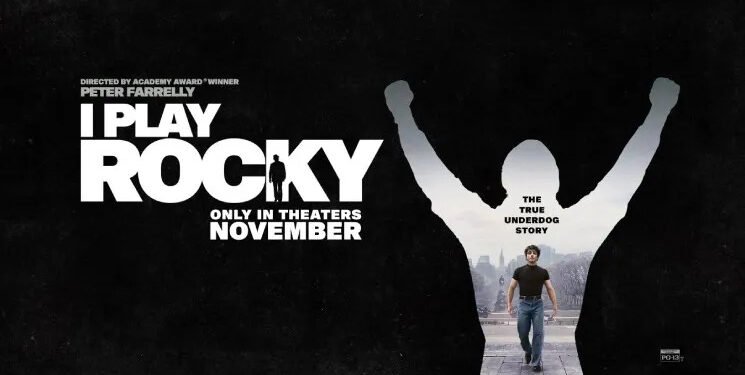


Anthony Ippolito delivers a star-making performance in Peter Farrelly’s heartfelt celebration of Sylvester Stallone and the incredible story behind one of cinema’s most beloved films.
I Play Rocky isn’t just another biopic. This is THE movie of the holiday season, one that will ignite a fire inside you that you didn’t even know was there. It’s the kind of film that reminds us why we fall in love with cinema, why we root for the underdog, and why sometimes believing in yourself and what you’ve created is worth every sacrifice in the world.
Nearly 50 years after Rocky became a cultural phenomenon, Peter Farrelly takes audiences behind the scenes of one of Hollywood’s greatest success stories. We all know Sylvester Stallone as the man who brought Rocky Balboa to life, but what many may not realize is just how close that story came to never happening. Before the fame, the accolades, and the franchise that would define generations, Stallone was a struggling actor who refused to let Hollywood dictate his future.
What makes I Play Rocky so remarkable is that it doesn’t simply celebrate the creation of an iconic film. It celebrates the man who believed in it when almost nobody else did. And despite knowing exactly how this story ends, I found myself completely swept up in every rejection, setback, and eventual triumph.
The Man Who Refused to Give Up
Before he became one of Hollywood’s biggest stars, Sylvester Stallone was a struggling actor who couldn’t seem to catch a break. Between failed auditions, financial hardship, and constant rejection, he was fighting an uphill battle in an industry that didn’t see him as leading-man material. His distinctive voice and appearance, qualities that would eventually make him instantly recognizable, were initially treated as obstacles standing in the way of his success.
Anthony Ippolito portrays a young Stallone who knows he has something special to offer, even if nobody else seems willing to give him the opportunity to prove it. When inspiration strikes and he writes Rocky in just three days, everything begins to change. Producers recognize the potential of his screenplay and are willing to pay him a life-changing amount of money for it. There’s just one problem: they don’t want him to star.
For most struggling actors, the decision would have been simple. Take the money, enjoy the financial security, and hope another opportunity comes along. But Stallone refuses. He didn’t write Rocky simply to sell a screenplay. He wrote it because he knew he was Rocky Balboa, and no amount of money could convince him otherwise.
It’s this determination that makes the film so compelling. Stallone’s refusal to compromise is admirable, but Farrelly also allows us to see how that unwavering belief can sometimes border on stubbornness. His decisions don’t just affect his own future; they impact the people who love him and are forced to endure the uncertainty alongside him.
One detail that absolutely broke my heart was learning about Butkus, Stallone’s beloved dog. I genuinely had no idea that his financial situation had become so desperate that he was forced to sell Butkus just to survive. As someone who loves dogs, I couldn’t imagine having to make that decision, especially when your dog is one of the few constants in your life during such an uncertain time. Thankfully, Stallone was eventually able to buy him back, but that moment really put into perspective just how much he was struggling before Rocky changed his life.
It’s moments like these that make I Play Rocky so much more than another Hollywood success story. I went into this film thinking I knew Stallone’s journey, but I was genuinely surprised by how much I didn’t know. We all know how his story ends, but seeing everything he endured to get there makes his eventual triumph that much more emotional and rewarding.

Anthony Ippolito IS Sylvester Stallone
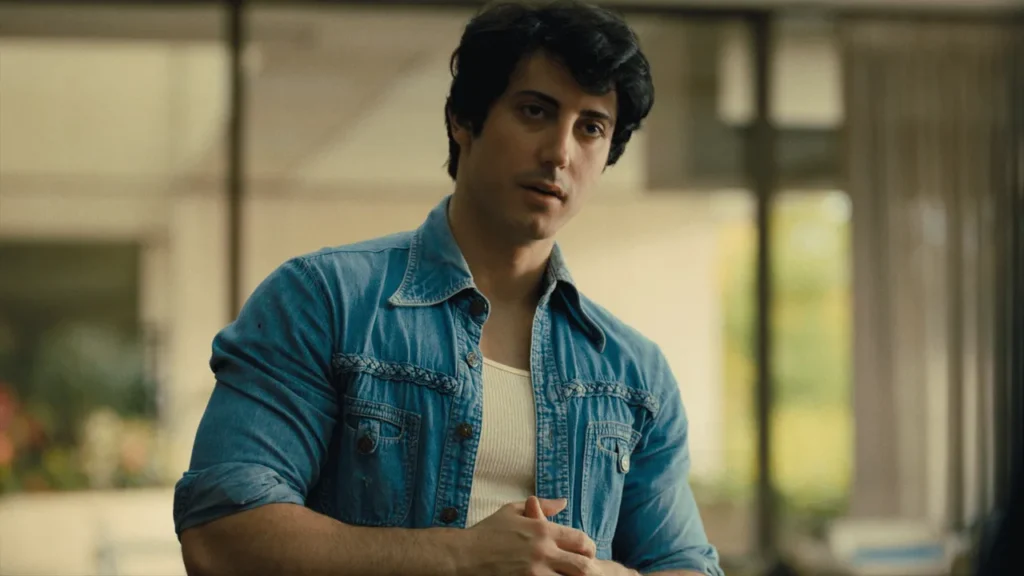
I cannot praise Anthony Ippolito enough because what he accomplishes here is nothing short of extraordinary. Portraying someone as recognizable as Sylvester Stallone is an enormous challenge, especially when audiences have spent decades watching his films and becoming familiar with every mannerism, expression, and inflection of his voice.
But Ippolito doesn’t just resemble Stallone. He completely embodies him.
From his physical appearance to his distinctive speech patterns, the resemblance is genuinely uncanny. There are moments when it feels as though you’re watching footage of a young Stallone rather than an actor portraying him. Yet what makes Ippolito’s performance so impressive goes far beyond the physical transformation.
He captures the insecurities of a man who desperately wants to be taken seriously, the frustration of constantly being underestimated, and the relentless confidence required to keep moving forward when every door seems to be closing. There’s a vulnerability beneath his determination that makes him incredibly easy to root for, even when his choices become difficult to understand.
Some of the film’s most effective moments come when Stallone is forced to confront the very qualities that make him different. The things Hollywood views as weaknesses are ultimately what make him special, and Ippolito beautifully captures that transformation without ever making it feel forced.
This is a star-making performance in every sense of the word. Anthony Ippolito has something truly special, and I wouldn’t be surprised if this film becomes a defining moment in his career.

AnnaSophia Robb and the Sacrifices Behind the Dream
One of the biggest surprises for me was just how beautifully written Sasha Czack, Stallone’s first wife, is in this film. AnnaSophia Robb delivers such a heartfelt performance, but what I appreciated even more was how much importance the story places on Sasha’s role in Stallone’s journey. So often in biopics about extraordinary individuals, we focus almost entirely on the person chasing the dream while the people supporting them are pushed into the background. I Play Rockytakes a different approach, and it was incredibly refreshing to see.
Sasha isn’t simply there to encourage Stallone when things get difficult. She’s someone who believes in him, recognizes his potential, and makes sacrifices of her own so he can continue pursuing something that, for much of their journey, seems almost impossible. The film allows us to understand the emotional weight of that support and how much of herself she puts into helping him achieve his dream. There’s a beautiful balance in the way their relationship is portrayed because while Stallone’s determination is inspiring, we also see how difficult it can be to love someone whose ambitions demand so much.
What makes this aspect of the film so powerful is that Sasha never feels like an afterthought. She’s an essential part of the story, and Robb brings such warmth, strength, and vulnerability to the role. We always hear about the sacrifices people make to achieve greatness, but rarely do we spend enough time acknowledging the sacrifices made by those standing beside them. I loved that I Play Rocky gave Sasha that recognition because it adds another emotional layer to a story I thought I already knew.

A Perfectly Cast Ensemble
As remarkable as Ippolito and Robb are, the entire cast of I Play Rocky deserves recognition. Whoever was responsible for putting this ensemble together deserves a raise because they absolutely knocked it out of the park.
Stephan James as Carl Weathers? A TOTAL KNOCKOUT! James brings an infectious charisma and confidence to the role, capturing the larger-than-life personality of the man who would become Apollo Creed. There’s something incredibly exciting about watching these familiar figures come together, especially knowing the impact their work would eventually have on cinematic history.
The supporting ensemble is equally impressive, with Toby Kebbell and P.J. Byrne bringing wonderful energy to producers Robert Chartoff and Irwin Winkler, while Jay Duplass makes a memorable impression as director John G. Avildsen. Matt Dillon also delivers an effective performance as Stallone’s father, adding another dimension to the insecurities and emotional obstacles that shaped his early life.
Rather than feeling like a collection of celebrity impersonations, these performances work together to create a world that feels authentic, lived-in, and full of personality. Everyone brings something meaningful to the table, and the film is all the better for it.

More Than Just Hollywood Nostalgia
One of the things that makes I Play Rocky so effective is how Peter Farrelly understands the emotional DNA of the original film. Rocky was never really about winning a boxing match. It was about proving that you belonged, finding dignity in the face of overwhelming odds, and refusing to let the world decide what you’re capable of achieving.
That same spirit runs through I Play Rocky, only this time the underdog isn’t a fictional boxer from Philadelphia. It’s the man who created him.
There’s something beautifully poetic about watching Stallone’s own struggles reflected in the character who would eventually change his life. Both men are underestimated, both are desperate for an opportunity, and both understand that sometimes going the distance matters more than the outcome itself.
Farrelly captures that connection beautifully, blending humor, nostalgia, and genuine emotion into a film that feels like a celebration of everything audiences have loved about Rocky for the past five decades. The behind-the-scenes recreations are especially enjoyable, giving fans a glimpse into the challenges of bringing the original film to life while highlighting the creativity and determination required to make something extraordinary with limited resources.
But what surprised me most was how emotional the film becomes when it focuses on the sacrifices made along the way. We often celebrate success without considering everything that had to happen to achieve it. The financial struggles, the strained relationships, the moments of self-doubt, and the uncertainty of whether any of it will ultimately be worth it.
Those moments are what elevate I Play Rocky beyond a conventional Hollywood biopic. It’s easy to admire Stallone’s determination knowing that his gamble eventually paid off, but imagine living through those decisions without knowing what the future held. Imagine turning down the kind of money that could change your life because you believed so deeply in something that nobody else could see.
That’s what makes this story so inspiring. It reminds us that dreams aren’t always practical, success is never guaranteed, and sometimes the greatest victories come from refusing to abandon what makes us who we are.
Final Thoughts
I Play Rocky is everything I wanted it to be and so much more. Peter Farrelly has delivered a film that’s funny, emotional, uplifting, and filled with the kind of infectious optimism that makes you want to get out of your seat and chase whatever dream you’ve been putting off.
Anthony Ippolito delivers an absolutely phenomenal performance as Sylvester Stallone, Stephan James is a standout as Carl Weathers, and AnnaSophia Robb brings tremendous heart to an already exceptional ensemble. Every member of this cast contributes to making the story feel as meaningful as the legacy it celebrates.
It’s heartbreaking, heartwarming, and one hell of a triumph. More than anything, it’s a reminder that believing in yourself isn’t always easy, especially when the people around you can’t understand why you’re willing to sacrifice so much for something that might never happen.
But sometimes that belief is exactly what changes everything.
By the time the credits roll, you’ll want to run straight to Philadelphia, charge up those iconic 72 stone steps, throw your fists into the air, and immediately revisit the boxing classic that started it all.
I Play Rocky isn’t just the story of how one of cinema’s greatest underdogs was created. It’s the story of the ultimate underdog who refused to give up on himself.
And if that doesn’t inspire you to chase your dreams, I don’t know what will.
Rating: 4.5 out of 5 Seths